Living in Arizona means learning to respect the weather fast. From scorching summer heat to violent monsoon storms, the climate here puts stress on the grid in ways that most states simply don’t face. If you’ve ever sat in a dark house in July wondering when the power is coming back on, you already have a firsthand understanding of how Arizona weather impacts power reliability — and why it matters.
This post breaks down which conditions push the grid to its edge, what triggers serious outages, and what Arizona homeowners can do to stay protected no matter what season it is.
Summer Heat: The Season That Tests the Grid Hardest
When temperatures climb past 110°F across the Valley, millions of households switch on their air conditioners at the same time. The jump in energy consumption is sudden and massive — that spike in electricity demand hits the electric grid all at once, sustained over weeks rather than hours. It’s one of the clearest examples of how Arizona weather impacts power reliability in a way that has nothing to do with storms.
Utility providers like Arizona Public Service (APS) and Salt River Project (SRP) plan extensively for summer peaks. But even with preparation, prolonged heat creates conditions where aging infrastructure simply can’t keep pace.
Here’s what’s happening behind the scenes during a heat wave:
- Peak demand hours run from roughly 3 PM to 8 PM, when workplaces close and everyone heads home to crank the AC
- Multi-day heat events deny the electrical grid any recovery time between demand cycles
- Older transformers are especially vulnerable — sustained high temperatures accelerate equipment failure
The stakes are real. Heat-related death during the summer is a documented, recurring problem in Maricopa County. A power outage at 4 PM in August isn’t a minor inconvenience — it’s a health emergency, particularly for elderly residents and young children.
Monsoon Season and What It Does to the Electrical Grid
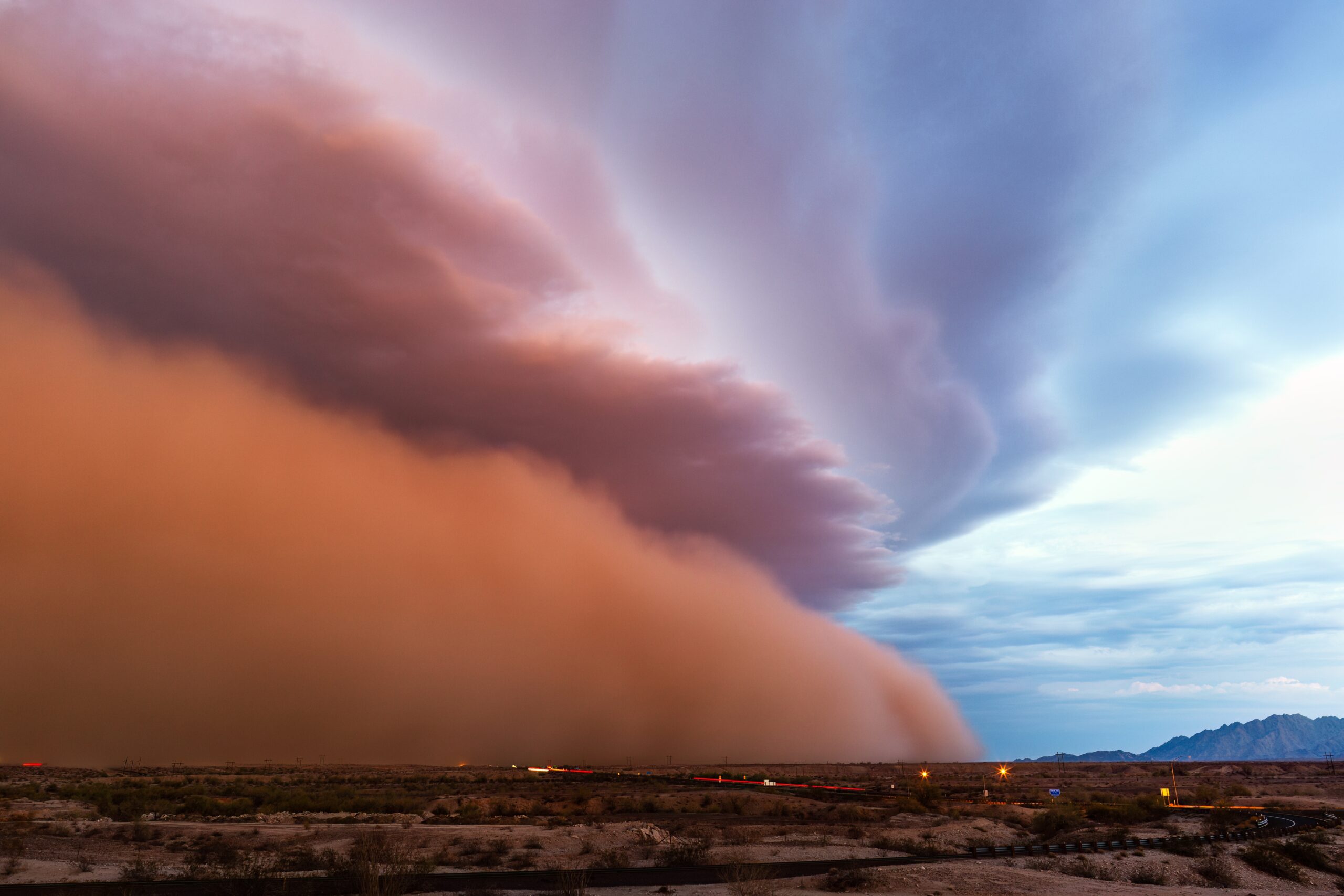
Just when the grid survives the worst of summer, monsoon season arrives with its own brand of destruction. From July through September, Arizona deals with fast-moving thunderstorm cells, haboobs, flash flooding, and high-velocity winds — sometimes within the same afternoon.
These severe weather events are brutal on above-ground utility infrastructure. Power outages caused by extreme weather events like these can affect tens of thousands of customers at once, stretching repair crews thin.
Here’s how each storm type damages the grid:
| Weather Event | Primary Grid Impact |
| Storm cell | Downed lines, blown fuses, equipment damage |
| Haboob (dust storm) | Flashovers on high-voltage lines, substation faults |
| Flash flooding | Substation flooding, delayed crew access |
| High-velocity winds | Structural failure of utility poles and towers |
Outages caused during monsoon conditions develop faster and are harder to predict than heat-driven disruptions — and that unpredictability is what makes them especially damaging to grid reliability across the region.
Phoenix at the Center of Arizona’s Power Outage Problem
Phoenix sits squarely at the heart of Arizona’s power reliability conversation. As one of the fastest-growing metros in the country, its electric grid faces constant pressure from both extreme weather and population growth.
Research from Climate Central has documented rising outage frequency and duration across the U.S., and Phoenix is no exception. In 2024, the region experienced back-to-back extreme heat events layered on an active monsoon season — a combination that stressed grid reliability more than most recent years.
Here’s a figure that surprises a lot of people: historically, Arizona experienced only six power outages caused by major disruptions in certain reporting windows. That sounds manageable — until you consider when those events hit and how long they lasted. Experiencing a blackout at 4 PM in August when it’s 114°F outside completely reframes what “only six” actually means for real families.
Utility investment is real: APS has prioritized grid resiliency, adding 300 megawatts of battery storage to buffer peak demand, and SRP has diversified its energy sources by incorporating renewable energy to reduce dependence on any single fuel type. Natural gas continues to balance supply during high-demand periods. But even with these improvements, the electrical grid serving the Phoenix metro remains vulnerable to the kinds of major power outages Arizona regularly produces.
Looking further ahead, projections suggest that by 2050, Arizona’s climate will be measurably more intense — putting even greater strain on an already-pressured power grid.
Why a Backup Generator Is the Practical Answer
Understanding how Arizona weather impacts power reliability matters — but what you do with that understanding matters more.
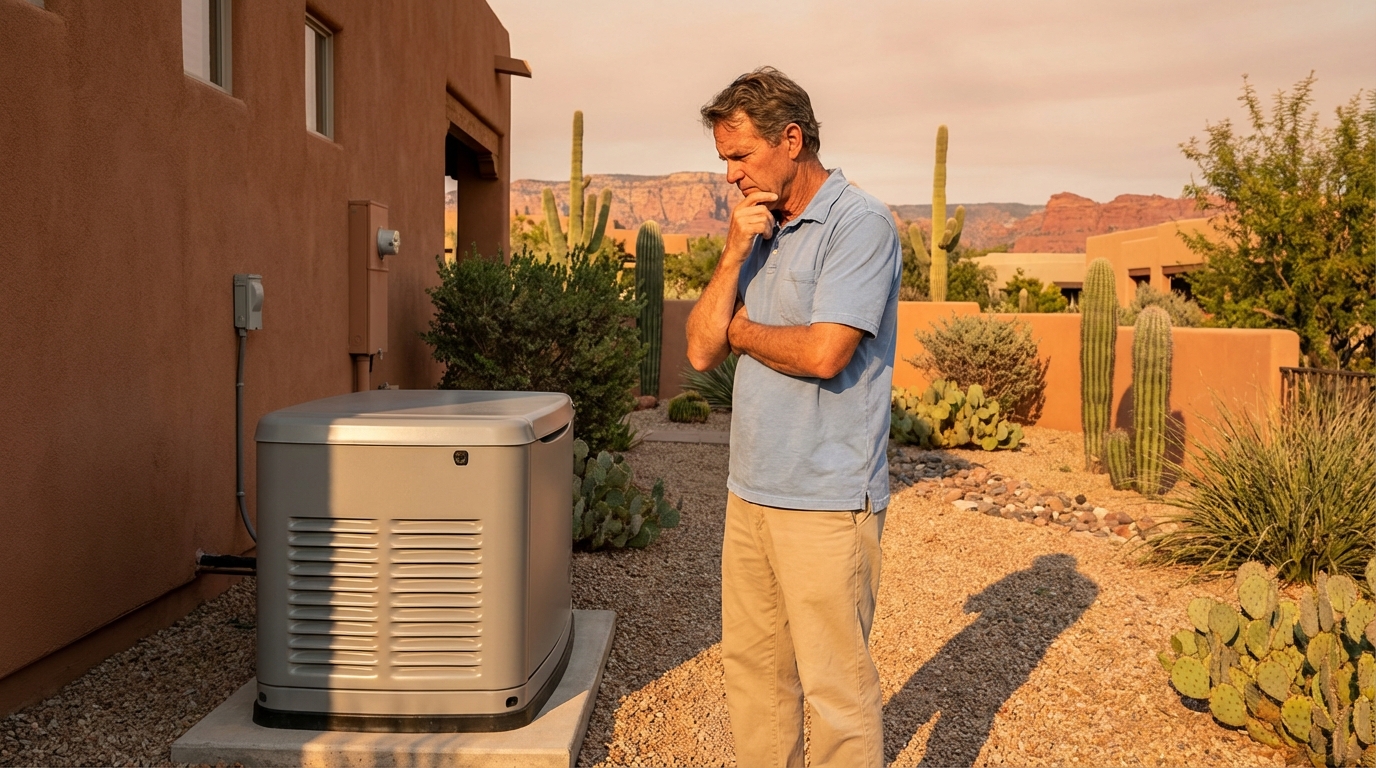
A whole-house standby generator is one of the most resilient solutions available to Arizona homeowners. It activates automatically within seconds of detecting a grid failure, so your HVAC keeps running, your refrigerator stays cold, and your household stays functional without you lifting a finger.
Most standby units in Arizona run on natural gas, which is a practical advantage: your fuel supply remains stable even when extreme weather conditions knock out the electric grid — meaning your backup system isn’t disrupted by the same event affecting the utility network.
Before committing to a unit, choosing the right size whole house generator for your Arizona home is the first decision to get right — the generator has to match your home’s actual load to be effective. Homes with outdoor spaces or detached structures will also need to factor in backyard wiring in Arizona: safe, code-compliant, and stress-free as part of the broader installation plan. We handle the complex permitting and code-compliant wiring so you don’t have to.
The climate isn’t getting milder. How Arizona weather impacts power reliability will remain a real and growing issue for homeowners across the Valley — and the time to prepare is before the next disruption, not during it.
Is a Whole House Generator Worth It in Arizona? Here’s the Bottom Line
If you live anywhere else in the country, debating a whole-house generator might make sense. In Arizona — where summer heat turns a power outage into a safety emergency and monsoon storms can drop an entire neighborhood’s grid without warning — the math is a lot more straightforward.
A whole-house generator ensures that no matter what Arizona’s climate throws at your home — a mid-July heat wave, a late-August haboob, or a monsoon storm that takes out your block — your family stays safe, comfortable, and connected. That’s worth the investment.
Think Electric delivers the expertise Arizona homeowners trust. Our licensed electricians specialize in:
- Emergency repair services available 24/7 when you need us most
- System upgrades to handle modern power demands and seamless generator integration
- Home safety electrical checks ensuring your family’s complete protection
- New installations of standby generators, comprehensive backup power systems, and electrical solutions
- And many more electrical services customized for Arizona homes and businesses
Think Electric understands Maricopa County’s unique challenges. Our team designs systems that perform through Arizona’s toughest conditions — giving you peace of mind when it matters most.
Ready to find the right home generator with reliable, automatic backup power? Contact us at 480-790-7907 for a free consultation.
Think Electric proudly offers professional home backup generator installation throughout Phoenix Metro and Central Arizona, including Phoenix, Mesa, and Chandler.
Call us today to schedule your consultation and discover the perfect generator that fits your Arizona home’s needs!